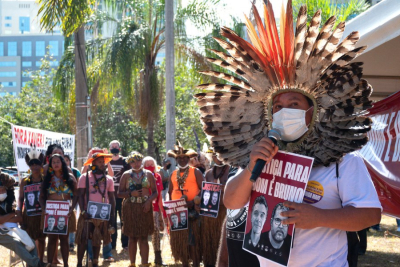
In Kazakhstan, human rights and international organisations have long pointed out that the authorities restrict the right to peaceful assembly by rejecting protest applications and penalising dissent. The referendum on the nuclear power plant was no exception. Across 12 cities, officials issued 45 rejections to civil society groups seeking to hold rallies on referendum day, while dozens of activists were detained or fined under various pretexts, including alleged violations of assembly rules or accusations of preparing mass unrest.
From Announcement to Crackdown
When President Kassym-Jomart Tokayev announced on 27 June 2024 that Kazakhstan would hold a referendum in the autumn, the news sparked concern among civil society. Critics feared that the process would be neither fair nor inclusive – and the following months proved them right.
In August 2024, authorities organised 20 official public hearings, presented as opportunities for open discussion. In reality, the oppositions’ voices were excluded or silenced. Some activists were not even allowed to attend. On 8 August 2024, Eldos Dosanov, an activist from Semey, was detained at a hearing and sentenced to 15 days in custody for allegedly disobeying police orders. Just days later, on 19 August, Meiirkhan Abdimanapov was fined KZT 129,000 (around EUR 200) after being blocked from attending the Astana hearing. He was fined for taking part in rallies held six months earlier to support incarcerated independent journalist Duman Mukhammedkarim. Abdimanapov said that the true goal of his detention was to prevent him from taking part in debates in Astana over the nuclear plant.
At the end of the month, Energy Minister Almassadam Satkaliyev openly threatened legal action against those expressing “negative emotional outbursts” about the nuclear power plant (NPP). He accused those who oppose these plans of being unpatriotic and obstructing Kazakhstan’s development.
Rising Voices, Rising Repression
In February 2024, a new civic group – AES Kerek Emes (There is No Need for Nuclear Powerplant) – was launched by environmentalists and experts, including Kaisha Atakhanova, Gulsum Kakimzhanova, Vadim Ni, Aset Nauryzbaev, and Asel Iztaeva. In September they held a press conference to announce their participation in the national referendum as a joint platform of opponents to the construction of a nuclear powerplant.
The AES Kerek Emes group was the leading initiative of the opponents of the construction of the nuclear power plant. They conducted numerous activities between February and October 2024, and even though the authorities know what the purpose of this group is, they never penalize it, unlike other numerous individual activists.
In the same month, activist Abzal Dostiyarov was fined approximately 105 EUR after publishing the results of a small independent survey on YouTube. Authorities claimed he had violated strict rules on opinion polling, which can only be conducted with prior approval from the Central Election Commission. The Prosecutor-General quickly followed with further threats of penalties for anyone conducting such polls.
Escalation Before the Vote
By late September, repression had intensified. On 29 September 2024, police detained at least twelve people in Almaty and surrounding areas – among them Aidar Mubarakov, Nurlan Temirgaliyev, Fazylzhan Sydykov, Zhanat Kazakbay, Nurgul Zheksembiev, Akmaral Shatemirkizy, Galina Akkuzova, Zhenis Maksutov, Rakysh Tokmanbet, Azat Toleukhan, Nurlan Zhauylbaev, and Yerbolat Aubekirov. They were accused of the preparation to commit a crime and the organising of mass riots. Several of their homes were searched. Four of the detainees were placed in custody, the rest were released.
In early October, more activists as well as journalists were targeted. On 3 October 2024, Tamara Eslyamova, editor of Uralskaya Nedelya, was fined KZT 110,760 (about EUR 175) for conducting a local poll on the nuclear power plant and publishing it on YouTube. On 4 October, just two days before the voting took place, at least 26 activists were detained across the country. Some received short jail sentences, others were fined or restricted from leaving their towns. Five prominent activists – Nurlan Zhaulybaev, Nurlan Temirghaliev, Zhanat Qazaqbay, Fazylzhan Sydyqov, and Aidar Mubarakov – were placed in pretrial detention in Almaty, accused of attempting to organise riots.
Referendum Day: Voices Silenced
On 6 October 2024, the day of the referendum, arrests continued. In Astana, Elvira Bekzadina was detained for holding a “STOP NPP” poster. In Almaty, Aset Abishev was arrested on his way to a polling station. Both were later fined on unrelated charges. Independent monitors meanwhile reported ballot stuffing and the expulsion of observers.
Notwithstanding the continued arrests and reports of ballot stuffing by independent monitors, the official outcome was announced by the Central Referendum Commission on 8 October. The Commission stated that the nuclear power plant project was approved, with 71.12% of the participants voting in favour and the total voter turnout reported at 63.66%.
A Referendum Without Public Voice
The Kazakh authorities’ actions during the nuclear referendum show a systematic crackdown on civic freedoms. Activists were fined, detained, and criminalised for exercising their rights to protest and participate in public debate. By excluding critical voices from hearings, denying registrations to civic groups, and punishing independent opinion polls, the government effectively silenced the public in a decision with long-term environmental consequences.
Sources:
RU; 16/08/2024; «Это не публичные обсуждения, а реклама АЭС!»; (Власть)
EN; 20/08/2024; Kazakh Activist Known For Stance Against Nuclear Plant Under Pressure; (Radio Free Europe / Radio Liberty)
EN; 12/09/2024; 4 People, 2 Companies Fined In Kazakhstan Over Polls On Possible Nuclear Power Station; (Radio Free Europe / Radio Liberty)
RU; 30/09/2024; В Алматы задержали 12 активистов, выступающих против строительства АЭС; (Власть)
RU; 01/10/2024; В Алматы завели уголовные дела против более десятка активистов перед референдумом по АЭС; (Радио Азаттык)
EN; 2/10/2024; Kazakh Activists Jailed Ahead Of Nuclear-Power Referendum; (Radio Free Europe / Radio Liberty)
RU; 2/10/2024; Мирный атом не терпит свободы мирных собраний; (КМБПЧ – Казахстанское международное бюро по правам человека и соблюдению законности)
EN; 04/10/2024; Kazakhstan Detains Activists Ahead of Nuclear Referendum; (Radio Free Europe / Radio Liberty)
EN; 06/10/2024; Kazakh Exit Polls Indicate 'Yes' Vote In Tightly Controlled Nuclear Referendum; (Radio Free Europe / Radio Liberty)
EN; 07/10/2024; Amid Clampdown On Dissent, Kazakh Voters 'Support' Nuclear Power Plant; (Radio Free Europe / Radio Liberty)
EN 07/10/2024; Observers Report Intimidation Tactics In Kazakh Nuclear Power Vote; (Radio Free Europe / Radio Liberty)
RU; 09/10/2024; Независимые наблюдатели сообщают о 120-процентной явке на участке в Уральске и нарушениях в ходе референдума; (Радио Азаттык)
RU; 09/10/2024; Общественное объединение «Независимые наблюдатели» заявило о провокациях в Алматы в день референдума; (Власть)
EN; 19/12/2024; Crackdown on dissent over nuclear power plant, controversial media accreditation rules, and anti-“LGBTQI+ propaganda’’ measures; (CIVICUS)